What Is eCMR? A Plain-Language Guide for Freight Companies
Everything you need to know about the electronic consignment note: what it is, how it works, who needs it, and what's changing in 2026–2027.
If you work in road freight, you have heard the term eCMR. You have probably been told it is coming, it is important, and you need to prepare. But between the regulatory jargon, the acronyms, and the vendor pitches, getting a straightforward answer to "what is eCMR and what does it mean for my business?" can be surprisingly difficult.
This guide explains eCMR in plain language — what it is, where it comes from, how it differs from paper CMR, what it requires, and what is actually changing over the next 18 months.
CMR: The Document That Has Run Road Freight Since 1956
Before understanding eCMR, you need to understand CMR.
CMR stands for "Convention relative au contrat de transport international de marchandises par route" — the Convention on the Contract for the International Carriage of Goods by Road. It was signed in Geneva in 1956 and has since been ratified by 58 countries, covering nearly all of Europe plus parts of Central Asia and the Middle East.
The CMR consignment note is the standard document for international road freight. It serves three legal functions simultaneously: it is a contract of carriage between sender, carrier, and receiver; it is a receipt confirming that the carrier has taken over the goods; and it is evidence for claims, disputes, or customs procedures.
A standard CMR note contains the sender's and receiver's names and addresses, the carrier's details, the place and date of taking over the goods, the place of delivery, a description of the goods including weight and packaging, transport charges, and a clause confirming that the carriage is subject to the CMR Convention.
Traditionally, this document is issued in three or four carbon copies — one for the sender, one for the carrier, one for the receiver, and often a fourth for customs or administrative purposes. It is filled out by hand or typewriter, signed physically at each stage, and the paper copy travels in the driver's cab from origin to destination.
This system has worked for nearly 70 years. It is also, by any modern standard, slow, error-prone, and expensive.
eCMR: The Same Document, Fully Digital
eCMR is simply the electronic version of the CMR consignment note. It contains exactly the same information, carries exactly the same legal weight, and serves exactly the same three functions — contract, receipt, and evidence.
The legal basis for eCMR was established in 2008, when an Additional Protocol to the CMR Convention was adopted in Geneva, specifying that consignment notes could be issued and managed electronically. The first cross-border eCMR transaction took place in January 2017, between Spain and France.
The core difference is not in what the document contains, but in how it moves through the supply chain. Instead of paper copies travelling in a truck cab, the eCMR exists on a digital platform that all parties — sender, carrier, driver, and receiver — can access. When goods are loaded, the sender confirms digitally. When the driver takes over, they sign electronically. When the goods arrive, the receiver confirms delivery — and the completed document is instantly available to everyone.
This changes three things fundamentally.
Speed. A paper CMR can take days or weeks to travel from the delivery point back to the sender's office for invoicing. An eCMR is complete the moment the final signature is captured. Carriers can invoice the same day instead of waiting for paper to arrive.
Accuracy. Handwritten CMR notes are frequently illegible, incomplete, or inconsistent. Digital entry eliminates transcription errors and allows automatic validation of mandatory fields.
Visibility. With paper, no one knows the status of a shipment's documentation until the physical copy arrives. With eCMR, all parties see updates in real time — including damage reports, delivery confirmations, and signature timestamps.
Where eCMR Is Accepted Today
As of early 2026, 39 countries have ratified the eCMR protocol, according to the IRU. This includes most EU member states plus countries like Turkey, Ukraine, the United Kingdom, Switzerland, and several Central Asian states.
The most recent ratifications include Armenia (October 2024), Hungary (August 2024), Austria (August 2024), Italy (July 2024), and Greece (October 2023), according to the UNECE ratification records. The remaining EU countries that have not yet ratified are expected to do so by the end of 2026.
There is an important practical nuance: if a shipment crosses a country that has not ratified the eCMR protocol, a paper CMR must still be carried in the vehicle for that leg of the journey. This is one reason the industry has been pushing for universal ratification — each gap in the chain undermines the efficiency gains of going digital.
For freight companies operating within the core European corridors (Germany–Benelux–France–Spain–Italy–Poland–Nordics–Turkey), the ratification coverage is already comprehensive enough for full eCMR adoption.
What the Regulations Require: eFTI and the 2027 Deadline
eCMR exists within a broader regulatory framework. The most important piece of legislation is the eFTI Regulation (EU 2020/1056) — Electronic Freight Transport Information.
The eFTI Regulation requires that from July 2027, all EU member state authorities must accept freight transport information submitted electronically through certified eFTI platforms. This does not mean paper CMR will be banned overnight — but it means that digital submission will be a legal right, and authorities cannot refuse it.
The practical effect is that eCMR platforms will need to meet eFTI certification standards. The delegated and implementing acts that define the technical requirements for platform certification, data structure, and access rights entered into force in January 2025. Member states are expected to have national systems ready by mid-2026.
Industry expectations, based on CargoON's 2024 report "Deep Dive into eCMR", are that 2026 will mark the start of large-scale implementation, with full industry adoption by 2029. Spain is moving particularly fast — its Sustainable Mobility Law targets mandatory digital transport documents by October 2026.
How eCMR Actually Works: The Signing Flow
A common misunderstanding is that eCMR is just a PDF version of the paper form. It is not. eCMR is a structured digital workflow with multiple authentication and signing steps.
Here is how a typical eCMR transaction works in practice.
The sender creates the eCMR on a digital platform, entering shipment details — goods description, weight, pickup and delivery addresses, transport conditions. When the driver arrives to collect the goods, both the sender and the driver confirm the handover electronically. This is the first signing event — the carrier has formally taken over the goods.
During transport, the driver can add notes, report incidents, or attach photos (for example, documenting pre-existing damage). All updates are timestamped and visible to all parties.
At delivery, the receiver inspects the goods and confirms receipt — or notes any damage or discrepancies. This is the second signing event. Once confirmed, the completed eCMR is instantly available to sender, carrier, and receiver. The carrier can invoice immediately.
Each signing event requires an electronic signature. The eCMR protocol requires that the signature ensures both the authenticity of the signer and the integrity of the document. Under the eIDAS regulation, an Advanced Electronic Signature (AdES) is sufficient for eCMR — you do not need the more expensive Qualified Electronic Signature (QES).
The Identity Question That Most Guides Skip
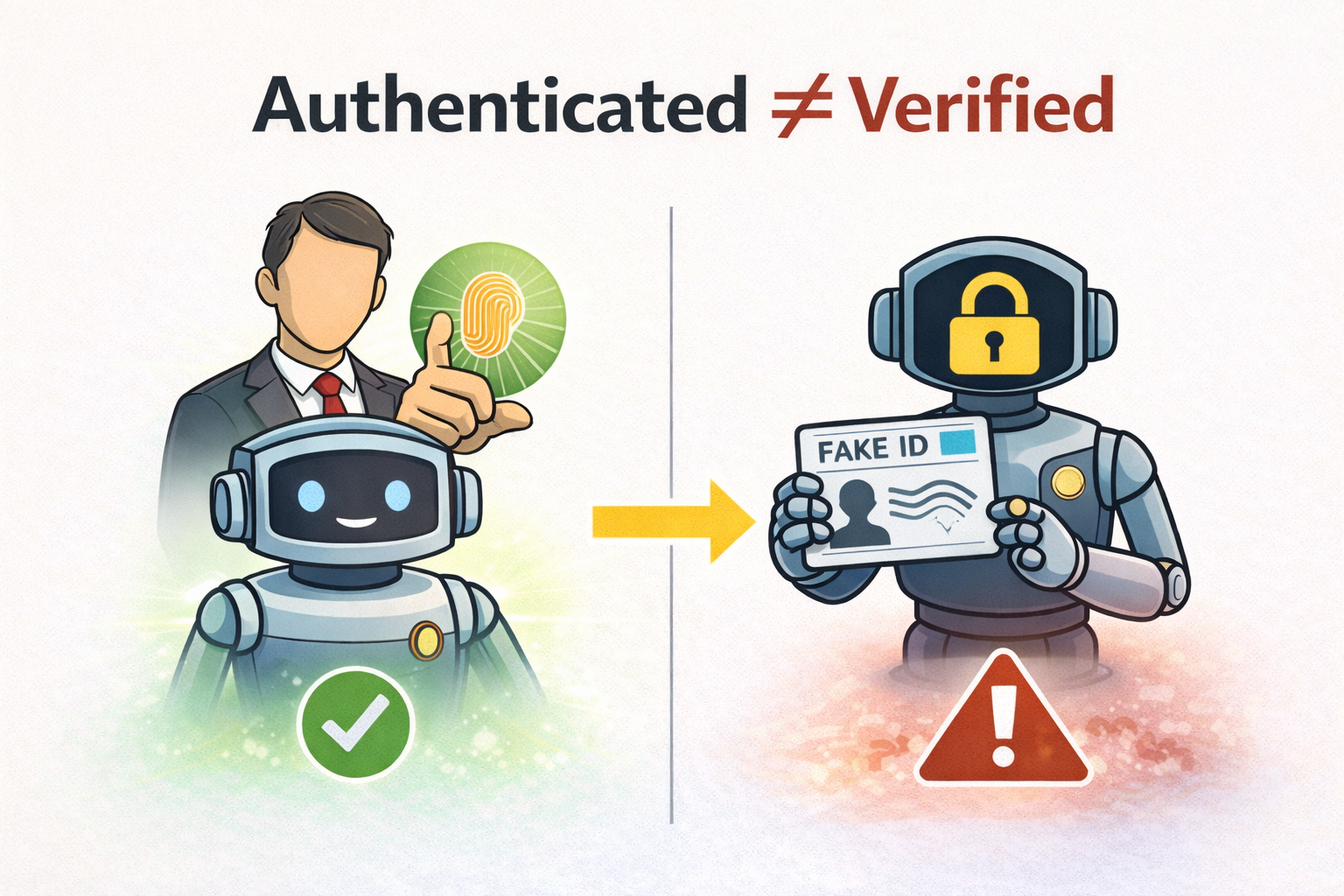
Here is where most eCMR explanations stop. They cover the document, the platforms, the regulations, and the timeline. But they skip the most fundamental practical question: how does the person at the loading dock prove who they are?
An eCMR is only as trustworthy as the identities behind it. If anyone can sign with a one-time code or a simple login, the document's value as evidence is undermined. This is not a theoretical concern — cargo theft through identity fraud is surging across Europe, with phantom carriers using stolen or fabricated identities to collect goods and disappear.
The challenge is particularly acute for cross-border freight. European drivers can use national eID systems. But a significant share of road freight in the EU is carried by drivers from Turkey, Ukraine, Moldova, and other non-EU countries. These drivers have no access to European eID infrastructure, and the EUDI wallet will not cover them.
This means that a complete eCMR solution needs more than a document platform. It needs a way to verify the identity of every signer — regardless of which country their passport was issued in.
At IdentiGate, we address this by creating digital identities from biometric passports via NFC. Passports with NFC chips are available in more than 170 countries. A driver scans their passport with a smartphone, completes biometric verification in 90 seconds, and receives a device-bound digital identity that can sign eCMR documents with an Advanced Electronic Signature. No European eID required.
The Business Case: What eCMR Saves
The financial case for eCMR is well-documented by independent research.
A study for the Danish Ministry of Transport found that paper CMR processing takes 23 minutes per document versus 9 minutes for eCMR. A separate automotive industry survey measured the cost at €6.23 per paper document versus €1.69 for eCMR — a 72% reduction. The University of Hasselt in Belgium found total lifecycle savings of over €13 per consignment note. The IRU estimates that full adoption could save 75–102 million work hours annually across European logistics.
We break all of these numbers down with full source citations in our detailed analysis of paper CMR vs eCMR costs.
Beyond direct cost savings, eCMR delivers faster invoicing (same-day versus weeks), reduced disputes (timestamped digital evidence versus illegible handwriting), better insurance documentation, and environmental benefits — the European Commission estimates eCMR could eliminate 160 million sheets of paper annually in the transport sector.
What You Should Do Now
If your freight company has not started preparing for eCMR, 2026 is the year to act. Here is a practical starting point.
Check your corridors. Are the countries you operate in covered by the eCMR protocol? For most intra-European routes, the answer is already yes. For routes involving non-ratified countries, you will need to maintain paper CMR capability alongside digital.
Choose your platform. Evaluate eCMR platforms based on eFTI certification readiness, integration with your TMS/ERP, support for the countries and languages you need, and the strength of identity verification for drivers and subcontractors.
Address the identity question. Can your drivers — including subcontracted drivers from non-EU countries — produce a verifiable digital identity for signing? If the answer is no, your eCMR workflow has a gap that will become a problem when authorities or insurers ask who signed a disputed document.
Train your drivers. eCMR changes the driver's workflow at the loading dock and delivery point. The process is simpler than paper, but it is different. Drivers need to be comfortable with mobile signing before it becomes mandatory.
Start now, not in 2027. The companies running eCMR pilots today — in Benelux, Spain, Germany, Scandinavia — will have worked out the operational details before the eFTI deadline. The companies that wait until July 2027 will be implementing under pressure.
The paper CMR has served the industry for 70 years. The eCMR is its successor. The question is no longer whether the shift will happen, but whether your company will be ahead of it or behind it.
Further reading from our blog:
- Paper CMR vs eCMR: The Real Cost of Not Going Digital
- AdES vs QES: Which Electronic Signature Level Does Your Logistics Business Actually Need?
- Cross-Border Digital Identity for Logistics
- The EUDI Wallet Covers 27 Countries. What About the Other 152?
- Cargo Theft in Europe by the Numbers
IdentiGate provides cross-border digital identity and advanced electronic signatures for eCMR and freight documentation. We verify biometric passports from more than 170 countries via a single API. Learn more at identigate.com
More in this cluster
- eFTI 2027 Compliance Checklist: 10 Steps for Freight Ops
- Digital Identity in European Freight: eCMR, eFTI, Cross-Border
- Which Countries Accept eCMR? The Complete 2026 List
- Is Sign-on-Glass a Valid eCMR Signature? Barely.
- eFTI Article 5: Identity Verification for Freight Platforms
Sources
CMR Convention and eCMR Additional Protocol
- IRU — CMR: Contracting parties and eCMR Protocol ratifications (58 CMR contracting parties; 39 have ratified or acceded to the eCMR Additional Protocol)
- UNECE — Additional Protocol to the CMR Convention concerning the Electronic Consignment Note (e-CMR) (adopted Geneva, 20 February 2008)
- UNECE — Latest ratifications — transport agreements
- IRU — First ever border crossing to use e-CMR electronic consignment note (Spain–France, January 2017)
eFTI Regulation and EU timeline
- EUR-Lex — Regulation (EU) 2020/1056 on electronic freight transport information (applies from 9 July 2027)
- European Commission, DG MOVE — The eFTI Regulation
- European Commission — Towards paperless freight transport: EU takes a step forward with eFTI Regulation implementation (9 January 2025)
Efficiency and cost figures
- CargoON — Deep Dive into eCMR (2024 industry report), referenced for 2026 implementation and 2029 full adoption expectations
- IRU — estimate of 75–102 million work hours saved annually across European logistics (see CMR)
- Further Danish Ministry of Transport, automotive-industry survey and University of Hasselt figures are itemised with primary citations in our companion post Paper CMR vs eCMR: The Real Cost of Not Going Digital
About the author
Mairi Kutberg is co-founder of IdentiGate, where she runs operations and content. She works at the intersection of EU regulation (eIDAS, NIS2, AMLR, eFTI), cross-border digital identity, and the practical compliance angles of advanced electronic signatures.